Creative design is one of the most misunderstood parts of visual communication, especially for beginners. At Branded Agency, we’ve seen firsthand that creative design isn’t about being naturally artistic—it’s about learning how to use visuals to communicate clearly and intentionally. The most effective designs we create for clients often come from applying simple principles that anyone can learn, not complex techniques or advanced tools.
Our team has worked with small businesses, startups, and creators who felt overwhelmed by design at first. After guiding them through a few foundational steps—like choosing the right colors, simplifying layouts, or improving visual hierarchy—we’ve watched their branding and confidence transform almost overnight. These real project experiences have shown us exactly which concepts beginners understand easily, and which ones cause the most confusion.
This guide explains what creative design is in the simplest possible way, using insights from what we teach clients every day. You’ll learn how creative design works, why it matters, and how to start applying it immediately—even with zero design background. By the end, you’ll have a clear foundation and practical steps you can use to improve your visuals with purpose and confidence.
Quick Answers
Creative Design
Creative design is the purposeful use of visuals to communicate clearly and effectively. Branded Agency’s experience shows that strong creative design is built on three essentials:
- Clarity: Make the message easy to understand at a glance.
- Consistency: Use cohesive fonts, colors, and layouts.
Beginners improve quickly by focusing on these fundamentals—not complex tools or artistic talent.
Top Takeaways
- Creative design is a powerful communication tool when used with intention and clarity.
- Most organizations overlook structured design, giving beginners a real opportunity to stand out.
- Small, strategic adjustments—like better typography or cleaner layouts—can dramatically improve results.
- Design skills hold steady demand and offer meaningful value even at the beginner level.
- Anyone can start improving today by practicing core principles and studying effective design examples.
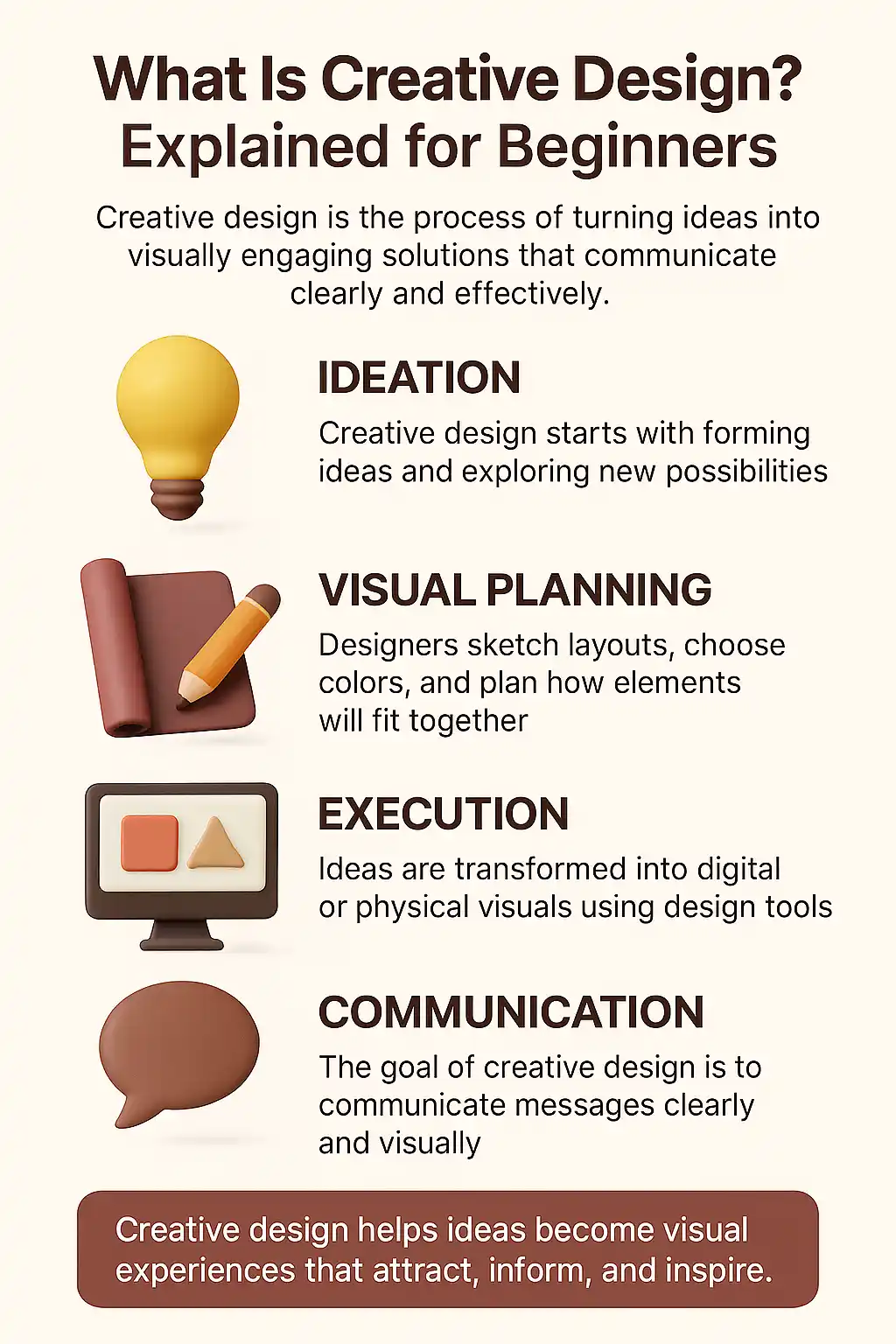
Creative design is the process of using visual elements—such as color, typography, imagery, layout, and composition—to communicate ideas clearly and effectively. Unlike traditional art, which focuses on expression, creative design focuses on solving a problem or delivering a message with purpose. For beginners, this means understanding that good design is not about making things look “pretty,” but about making information easy to understand and memorable.
At Branded Agency, we’ve seen that the most successful beginner designs follow three simple principles: clarity, consistency, and intention. Clarity ensures the message is easy to grasp at a glance. Consistency helps every visual element feel unified and professional. Intention guides every design choice so each part supports a goal—whether that’s grabbing attention, improving readability, or encouraging action.
Creative design shows up everywhere: logos, websites, business cards, product packaging, social media graphics, and even digital presentations. When done well, it helps a brand stand out, builds trust, and makes information easier to absorb. The good news for beginners is that you don’t need advanced tools or years of training to start. By learning the basic principles and practicing simple projects, anyone can begin creating designs that look polished and purposeful.
“In every project we take on at Branded Agency, we’ve seen that creative design is less about artistic talent and more about making intentional decisions that guide how people think and feel. Beginners often assume design starts with visuals, but in practice, it starts with clarity—understanding the message so well that every color, font, and layout choice supports it. Once that mindset shifts, even first-time designers can create work that looks polished and communicates with purpose.”
The 7 Creative Design Resources Every Beginner Should Rely On for Real Growth
1. Adobe Creative Cloud Learn – Build a Strong Foundation With the Tools Pros Use
For beginners who want to understand creative design the right way from day one, Adobe’s learning hub delivers structured tutorials grounded in real industry workflows. It’s an essential starting point for anyone serious about elevating their design skills.
URL: https://helpx.adobe.com/creative-cloud/tutorials-explore.html
URL: https://helpx.adobe.com/creative-cloud/tutorials-explore.html
2. Canva Design School – Learn the Essentials Without the Learning Curve
Canva’s lessons give beginners the confidence to create quickly while still understanding the strategic thinking behind their visual choices. It’s one of the fastest ways to start applying design principles in real-world projects.
URL: https://www.canva.com/designschool/
URL: https://www.canva.com/designschool/
3. Nielsen Norman Group – Understand the Psychology Behind Effective Design
NN/g’s research reveals why certain visuals work—and why others don’t—by focusing on user behavior and perception. For beginners, this insight is invaluable because great creative design always starts with understanding how people think.
URL: https://www.nngroup.com/articles/
URL: https://www.nngroup.com/articles/
4. AIGA Resources – Discover the Standards That Shape Professional Design
AIGA provides the broader context behind the design industry: ethics, purpose, responsibility, and the role design plays in building meaningful communication. It helps beginners see beyond aesthetics and understand design as a strategic discipline.
URL: https://www.aiga.org/
URL: https://www.aiga.org/
5. Google Fonts Knowledge – Strengthen Your Typography Skills With Practical Guidance
Typography is one of the most underestimated parts of creative design, yet it’s foundational to clear communication. Google Fonts Knowledge breaks down complex concepts into simple, actionable lessons that beginners can apply immediately.
URL: https://fonts.google.com/knowledge
URL: https://fonts.google.com/knowledge
6. Smashing Magazine Design Guides – Stay Informed With Insight From Industry Leaders
Smashing Magazine offers design guidance rooted in expertise and real-world challenges, from layout and color to accessibility and visual hierarchy. It’s an excellent ongoing resource for beginners who want to sharpen their instincts and stay current.
URL: https://www.smashingmagazine.com/category/design
URL: https://www.smashingmagazine.com/category/design
7. Interaction Design Foundation – Build Design Confidence Through Structured Learning
IDF’s courses bring clarity to core design principles, helping beginners develop a deeper understanding of how design supports communication, usability, and user experience. It provides the kind of foundational knowledge that remains relevant long-term.
URL: https://www.interaction-design.org/
URL: https://www.interaction-design.org/
Supporting Statistics: Why Strategic Creative Design Matters
1. Most Businesses Don’t Use Structured Design
Only 16.1% of U.S. companies use design as a structured process.
Just 11.4% maintain a dedicated design budget.
Branded Agency Insight: Most businesses lack a strategic design approach. Beginners who understand foundational principles—and use a simple brand development checklist to guide their decisions—can create an immediate competitive advantage.
Only 16.1% of U.S. companies use design as a structured process.
Just 11.4% maintain a dedicated design budget.
Branded Agency Insight: Most businesses lack a strategic design approach. Beginners who understand foundational principles—and use a simple brand development checklist to guide their decisions—can create an immediate competitive advantage.
2. Design Roles Earn Above the National Median
Median wage for arts and design roles: $53,180.
National median wage: $49,500.
Roughly 84,900 openings projected annually through 2034.
Source: U.S. Bureau of Labor Statistics
Branded Agency Insight: Steady demand matches what the agency sees in practice—design skills translate into real, marketable value early on.
Median wage for arts and design roles: $53,180.
National median wage: $49,500.
Roughly 84,900 openings projected annually through 2034.
Source: U.S. Bureau of Labor Statistics
Branded Agency Insight: Steady demand matches what the agency sees in practice—design skills translate into real, marketable value early on.
3. Small Businesses Depend Heavily on Clear Visual Communication
99.9% of U.S. businesses are small businesses.
More than 33.2 million small firms nationwide.
They employ 61.7 million workers (46.4% of the private workforce).
Source: SBA Small Business Data
Branded Agency Insight: Small businesses often lack internal design expertise. Simple, clear creative design improvements frequently boost trust and engagement overnight.
99.9% of U.S. businesses are small businesses.
More than 33.2 million small firms nationwide.
They employ 61.7 million workers (46.4% of the private workforce).
Source: SBA Small Business Data
Branded Agency Insight: Small businesses often lack internal design expertise. Simple, clear creative design improvements frequently boost trust and engagement overnight.
Final Thought & Opinion
Creative design is far more strategic than many beginners assume. When visuals are created with clarity and intention, they guide attention, strengthen communication, and support stronger business outcomes.
Branded Agency sees this daily in real client work. Small, purposeful adjustments—cleaner typography, consistent layouts, clearer hierarchy—often produce immediate improvements in engagement and trust.
What the Data and Experience Both Show
Most businesses do not use design strategically, which creates opportunities for beginners.
Thoughtful design doesn’t require advanced skills—just foundational principles applied consistently.
Small businesses, which make up nearly the entire U.S. market, depend heavily on clear visual communication, and often look to a marketing agency to help them achieve it.
Most businesses do not use design strategically, which creates opportunities for beginners.
Thoughtful design doesn’t require advanced skills—just foundational principles applied consistently.
Small businesses, which make up nearly the entire U.S. market, depend heavily on clear visual communication, and often look to a marketing agency to help them achieve it.
Branded Agency’s Perspective
Design is accessible. Anyone who understands the basics can create meaningful impact.
Design is strategic. It shapes how messages are seen, understood, and remembered.
Design is a differentiator. Beginners who adopt a purposeful approach stand out quickly.
Bottom line: Creative design isn’t optional anymore. It’s a skill that amplifies communication, accelerates growth, and gives every message a more compelling voice. Thoughtful design isn’t just something people notice—it's something they feel.
Design is accessible. Anyone who understands the basics can create meaningful impact.
Design is strategic. It shapes how messages are seen, understood, and remembered.
Design is a differentiator. Beginners who adopt a purposeful approach stand out quickly.
Next Steps
Review Key Resources
Explore the recommended platforms.
Start with one tool that fits your comfort level.
Apply Core Design Principles
Focus on clarity, consistency, and intentional choices.
Improve one element at a time (fonts, spacing, layout).
Study Designs You Admire
Choose 3–5 strong examples.
Identify what works: color, hierarchy, simplicity.
Create a Simple Starter Project
Design a basic social post, flyer, or logo.
Practice applying the principles from this guide.
Ask for Feedback
Share your work with peers or online communities.
Watch for repeated suggestions to guide improvements.
Build a Personal Design Toolkit
Save fonts, color palettes, and templates you like.
Use them as quick references for future projects.
Practice and Iterate Often
Revisit older designs and refine them.
Stay curious and continue exploring new ideas.
Review Key Resources
Explore the recommended platforms.
Start with one tool that fits your comfort level.
Apply Core Design Principles
Focus on clarity, consistency, and intentional choices.
Improve one element at a time (fonts, spacing, layout).
Study Designs You Admire
Choose 3–5 strong examples.
Identify what works: color, hierarchy, simplicity.
Create a Simple Starter Project
Design a basic social post, flyer, or logo.
Practice applying the principles from this guide.
Ask for Feedback
Share your work with peers or online communities.
Watch for repeated suggestions to guide improvements.
Build a Personal Design Toolkit
Save fonts, color palettes, and templates you like.
Use them as quick references for future projects.
Practice and Iterate Often
Revisit older designs and refine them.
Stay curious and continue exploring new ideas.
FAQ on Creative Design
Q: What does creative design mean for beginners?
A: It is the intentional use of visuals to communicate clearly. Branded Agency sees beginners succeed fastest when they focus on clarity first.
Q: Do you need natural talent to improve at design?
A: No. Skills grow through practice. Simple principles like hierarchy and spacing create quick improvement.
Q: What tools should beginners start with?
A: Canva for easy learning. Adobe tools for more control. Many beginners at Branded Agency transition as their confidence grows.
Q: How does creative design help small businesses?
A: Clear visuals build trust. Small adjustments—better fonts, spacing, color—often boost engagement immediately.
Q: How long to see improvement in design skills?
A: Progress often appears within weeks. Real projects and consistent practice accelerate learning.
A: It is the intentional use of visuals to communicate clearly. Branded Agency sees beginners succeed fastest when they focus on clarity first.
A: No. Skills grow through practice. Simple principles like hierarchy and spacing create quick improvement.
A: Canva for easy learning. Adobe tools for more control. Many beginners at Branded Agency transition as their confidence grows.
A: Clear visuals build trust. Small adjustments—better fonts, spacing, color—often boost engagement immediately.
A: Progress often appears within weeks. Real projects and consistent practice accelerate learning.