Most small game publishers treat slow sales as a product problem. They go back to the rulebook for another editing pass, or commission sharper cover art, certain the fix lives in the game itself. Sometimes it does. Far more often, the game is ready and the marketing simply never happened. And nobody picks a tabletop RPG they have never heard of.
Good DnD and TTRPG marketing fixes that. For a small publisher, the deciding factor was never budget. It is reach: getting your game in front of the specific players who would love it, in the places they already spend their time. I have watched small brands in plenty of niches either break through or quietly disappear, and the difference almost always comes down to the plan, not the money behind it. Here is the approach that works, in the order I would tackle it.
TL;DR Quick Answers
DnD and TTRPG Marketing
DnD and TTRPG marketing is how a tabletop role-playing game reaches the specific players who will love it, and how those players become a community that buys and keeps coming back. For a small publisher, success here depends on reach and trust far more than on budget.
What actually works:
Get specific about your player first. A horror RPG and a cozy one need completely different messages, so define that player before you spend a dollar.
Build channels you own. Your email list outsells social media and paid ads, and no algorithm can throttle it.
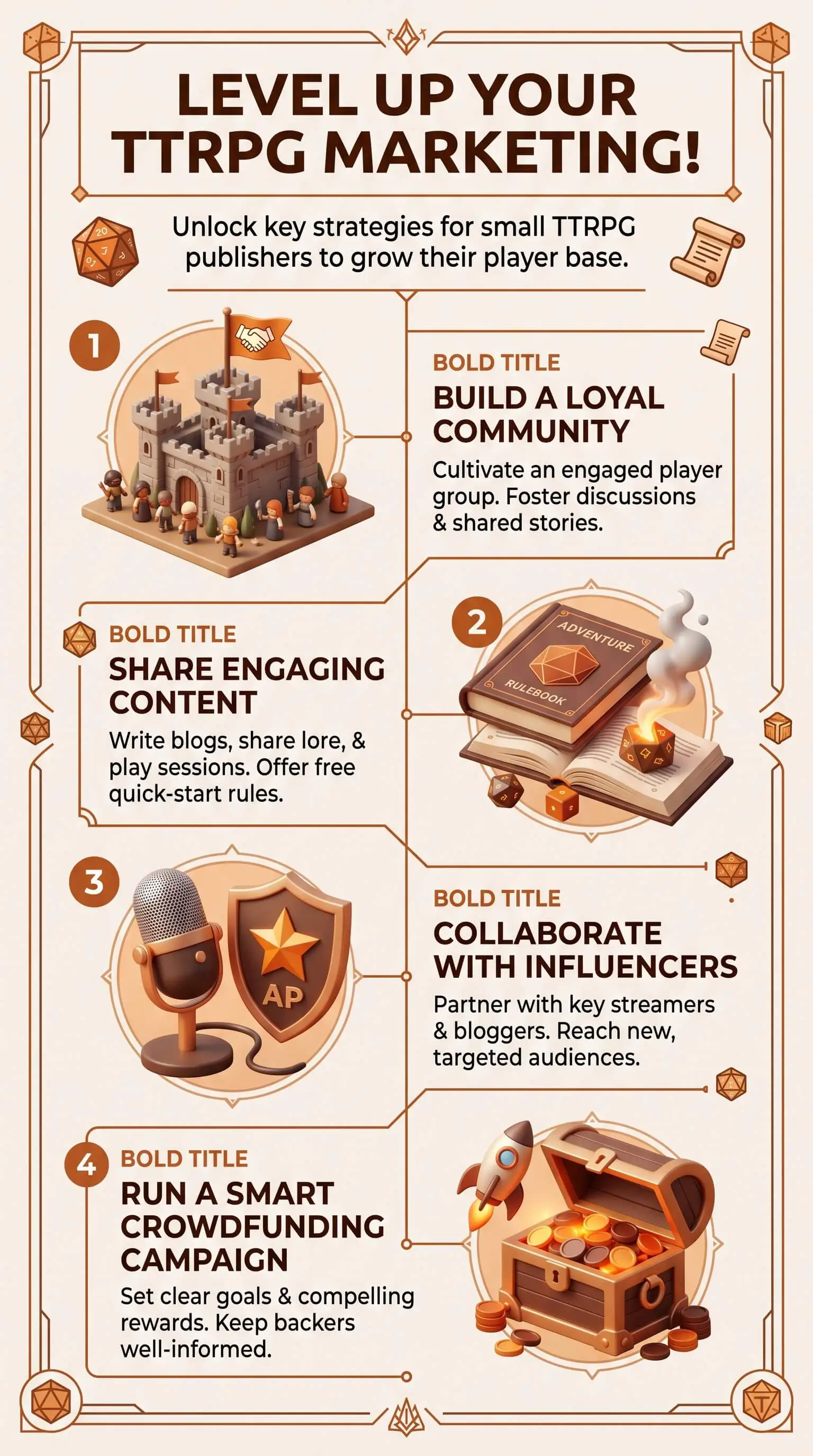
Treat crowdfunding as a campaign. You win it before launch day, with a warm audience already in place.
Show up where players gather. Be active on Discord, Reddit, and at conventions well before you ask anyone to buy.
Make your niche the advantage. A tightly focused game with loyal fans beats a generic one with a bigger ad spend.
Top Takeaways
Good DnD and TTRPG marketing comes down to strategy and consistency, not the size of your ad budget.
Most of what works here is just solid marketing fundamentals pointed at a passionate, hard-to-fool niche.
Get specific about your players and your hook before you spend money on anything else.
Build channels you own, your email list above all, so no algorithm change can wipe out your reach.
Win crowdfunding campaigns before launch day, and keep first-time buyers around long enough to become a community.
If you would rather have specialist help than build the plan alone, support exists for this exact corner of the hobby.
How to Market a Tabletop RPG Without a Big Budget
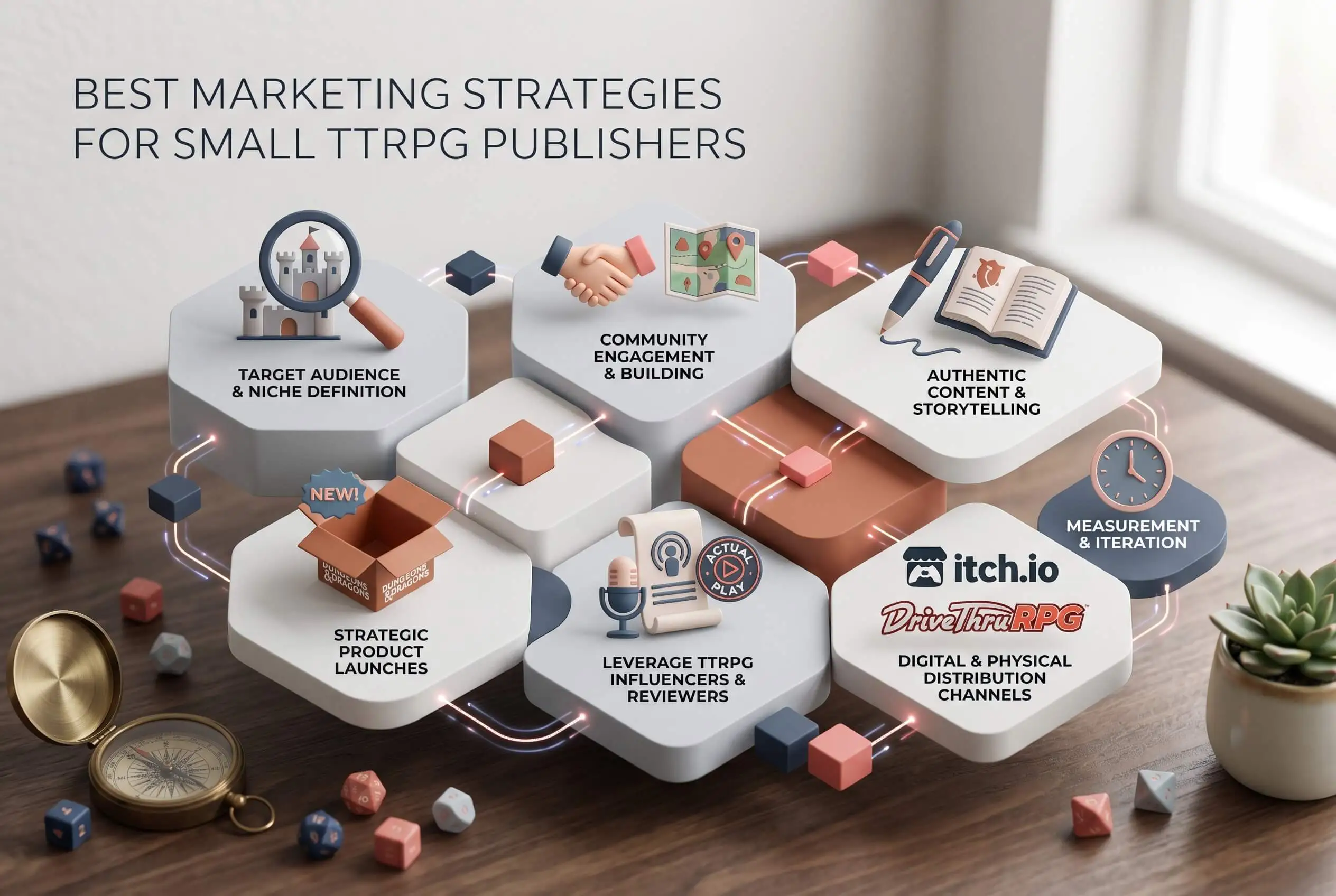
Marketing a tabletop RPG works differently from marketing almost anything else. Your buyers are not casual shoppers. They are storytellers and game masters who live in the hobby and can smell a hollow pitch from across the room. That makes them harder to win and far more loyal once you do. The five priorities below build on each other. Get the early ones right and the rest get easier.
Get Specific About Who Your Game Is For
It is tempting to lead with your mechanics. Players decide on something else, though. They want to know what kind of night your game creates at the table, and what stories it lets them tell. So before you spend a dollar, get specific about who that player is. A gritty survival horror game and a cozy, low-stakes one need completely different marketing, even when both sit in the same category. Once you know your player, every other choice gets easier.
Build a Brand Players Recognize and Trust
Your brand is your voice and your values made visible. It should look and sound the same everywhere a player sees it, from your store page to your funding campaign, because a strong brand marketing campaign depends on consistency people instantly recognize. Small publishers earn trust by being recognizably, consistently themselves. Work out the one thing your game gives players that Dungeons and Dragons does not, then say it the same way every time. Consistency is what turns a stranger into someone who remembers your name.
Grow Marketing Channels You Actually Own
Social platforms rewrite their rules constantly, and ad costs only climb. Your website and your email list are different. You own them, and no algorithm change can take your audience away. Start building that email list early, and give people a concrete reason to sign up, like a free one-shot adventure or a printable set of character sheets created through thoughtful board game copywriting services that keep players engaged long after the first visit. Months later, a warm list will be the single best predictor of whether your launch works.
Win Your Crowdfunding Campaign Before It Launches
For most indie publishers, crowdfunding is still the most proven way to fund a game and prove people want it. Most first-timers miss the real point, though. You win the campaign before it ever goes live. A pre-launch page and a warm audience do more for your final total than anything you tweak on the campaign page during launch week. Crowdfunding pays back the quiet groundwork you put in over the months before it, so start early.
Turn First-Time Buyers Into a Community
The sale is not the finish line. A player who buys once is worth a little. A player who joins your Discord and comes back to fund your next project is worth many times that. Give people reasons to stay close. That means a space to talk with other players and updates actually worth opening. It is the unglamorous part of the job, and it is where small publishers quietly build something that lasts.
“The thing I see sink small publishers most often is rarely the game itself. It is treating a launch like a one-day product drop instead of a community they should be building. They assume the problem is money. Usually the problem is that almost nobody knows the game exists, and you do not fix that by buying ads. You fix it by showing up, with a clear identity, in the rooms where players already gather, for months before you ask anyone to spend a cent. The publishers who understand that almost always beat the ones who simply outspend them.”
7 Essential Resources
You do not need a big team to market a tabletop RPG well. You need a short list of the right tools and communities. These seven cover funding, distribution, audience, and market insight.
Kickstarter. The crowdfunding platform most indie tabletop launches still call home. Reading through funded campaigns in your genre is some of the best free market research you will find.
BackerKit. Best known for pledge management. The bigger win is its pre-launch pages, which let you gather interested followers before a campaign opens.
DriveThruRPG. The largest digital marketplace for RPGs. Its built-in discovery, reviews, and print-on-demand put your game in front of people already shopping for one.
itch.io. An indie-friendly storefront and community. Flexible pricing, regular game jams, and an audience that hunts for smaller, stranger titles make it a natural fit for a first release.
Gen Con. North America's largest tabletop convention, and the densest crowd of your target players you will find anywhere. Even attending as a visitor teaches you how players talk about games.
r/RPGdesign. An active Reddit community where designers and small publishers trade blunt, current advice on marketing, playtesting, and launches.
ICv2. A long-running source of hobby-games news and sales charts. Useful for seeing what is selling and where the market is moving.
3 Statistics
A few numbers are worth keeping in front of you as you plan.
The tabletop RPG market reached an estimated 1.9 to 2 billion dollars in 2024 and keeps growing. Demand for the hobby is strong, so for most small publishers the bottleneck is visibility rather than interest. Source: RPGdrop.
In 2024, tabletop projects took 83 percent of all pledges in Kickstarter's Games category, and tabletop campaigns hit an 80 percent success rate. For indie publishers who prepare properly, crowdfunding still works. Source: Kickstarter.
Email marketing returns roughly 36 dollars for every dollar spent, well ahead of most paid channels. If your budget is tight, your own email list is the smartest place to put your hours. Source: MailerLite.
Final Thoughts
It is easy to fixate on what big publishers have and you do not, like deep budgets and IP that everyone already knows. The honest answer is that none of it lets them do what you can. You can know your players by name and shape your next release around what they actually tell you. A studio with fifty designers cannot, and no ad budget buys that kind of closeness.
My honest opinion, after watching this pattern repeat for years, is that small publishers lose to scattered focus far more than they lose to small budgets, which is something any experienced multicultural marketing agency will tell you when trying to build meaningful audience connections. Choose the audience you can serve better than anyone else, and build a brand nobody could mistake for someone else's. Then show up, week after week, until players know your name. Do that, and you will not need to outspend the giants. You just need to out-care them.
Frequently Asked Questions
How do small TTRPG publishers compete with Wizards of the Coast?
Not on budget, and they should not try to. A small publisher wins by serving one specific niche better than a large company ever could, and by earning real trust from that community. A sharply focused game with a loyal audience will outlast a generic one with a big ad spend.
Do I need to run a Kickstarter to launch a TTRPG?
No, but it is still the most proven route for indie publishers. A campaign funds your print run and proves people want the game before you commit to that cost. Skip it, and you will need another way to cover production and test real demand.
What's the best marketing channel for an indie TTRPG?
An email list you own. It costs almost nothing, no platform can throttle it, and it reliably outsells social media and paid ads. Social platforms and conventions still matter, but their main job is feeding people into that list.
How much should a small publisher spend on marketing?
Less than most people expect, at least at the start. The early work is mostly time, not money. Audience research, a clear brand, content, and a growing list all cost hours rather than dollars. Keep paid ads small and test-driven until a specific ad proves it can sell, then put money only behind what already works.
When should I hire marketing help instead of doing it myself?
Bring in help when your problem is strategy or copy rather than money, and your own effort has stalled. If you are putting in the hours and still not seeing movement, someone who knows the tabletop community well can save you months of trial and error.
Start Building Your TTRPG Marketing Plan
Your game deserves to be found, and you do not have to do everything at once to get there. Pick one move and make it this week. Get specific about the players you are building for, or finally start the email list you keep putting off, the same way a freelance healthcare content writer builds an audience by consistently creating useful niche content over time. Either one puts you ahead of the many small publishers still waiting on a perfect moment that never arrives. The hobby is growing fast. Make sure your game grows with it.